Salisbury and the Magna Carta
An hour by train to a cathedral city built in one go — and the water meadows Constable painted.
The short version
- Direct trains run from Bath Spa to Salisbury about hourly, taking an hour — times at nationalrail.co.uk. The cathedral is a ten-minute walk from the station.
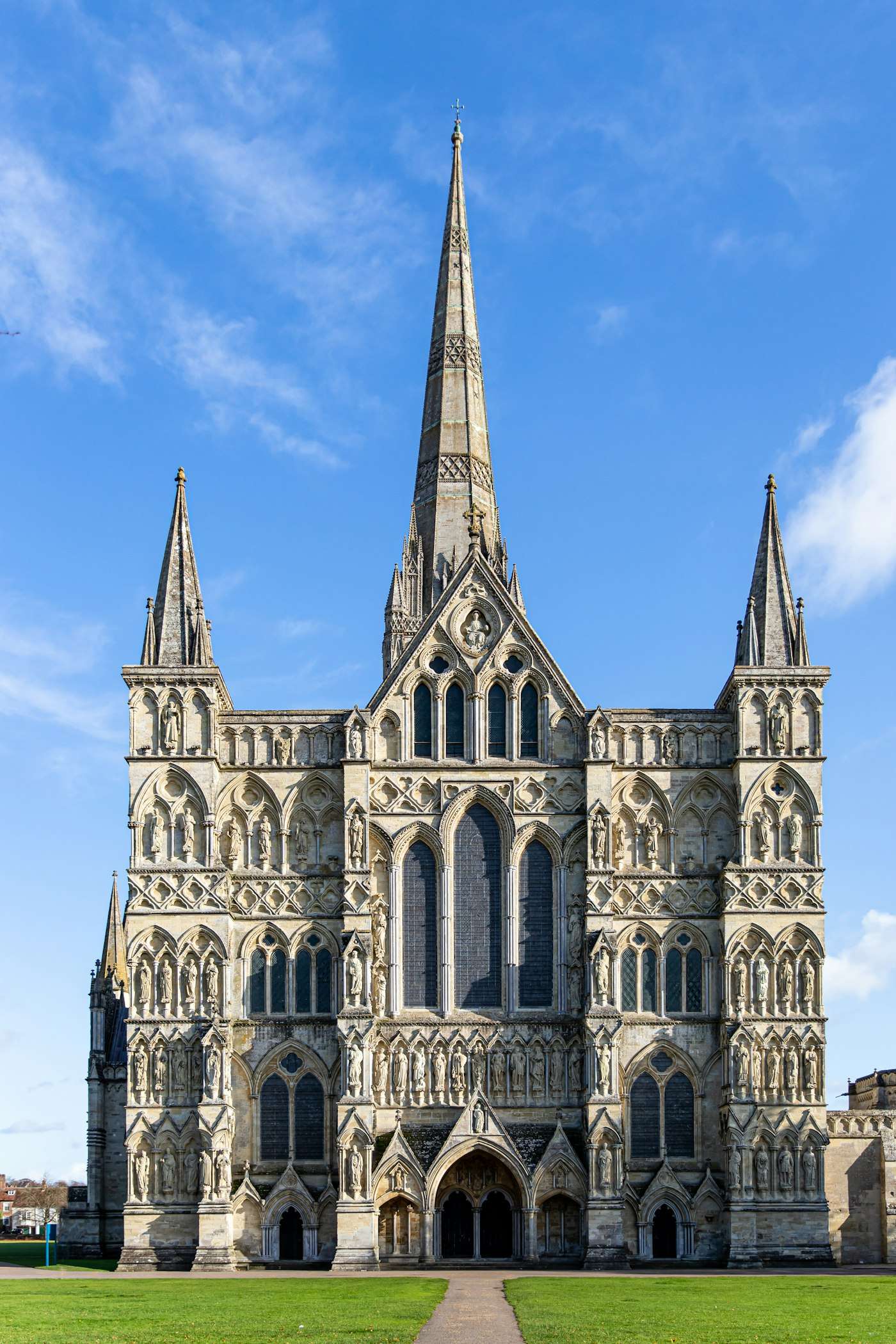
- The cathedral went up in just 38 years, which is why it reads as one seamless Early English whole; its spire, added later, tops out at 123 meters — Britain’s tallest. Entry £12.50 booked ahead; details at salisburycathedral.org.uk.
- The Chapter House displays the best preserved of the four surviving 1215 Magna Carta originals — the document is smaller and denser than its legend, and standing over it is the day’s quiet high point.
- The medieval clock in the nave has ticked since about 1386 — among the oldest working clocks anywhere — and the tower tours climb into the spire’s wooden forest of scaffolding for those with legs and a head for it.
- The Cathedral Close is Britain’s largest and calmest, and Old Sarum — the abandoned hilltop where the first cathedral stood — is a two-mile walk or short ride for ramparts, foundations, and the view back to the spire.

Getting there
Great Western trains run direct from Bath Spa to Salisbury roughly hourly, taking about an hour through the Wylye valley. From Salisbury station, the spire does the navigating — ten minutes on foot brings you into the Close through the medieval gates. Old Sarum sits two miles north: a footpath along the Avon, a short bus, or a taxi. Drivers take the A36 in about 75 minutes, but the train wins on relaxation and the Close’s parking is scarce.
The day
Enter the Close and let the approach work — the cathedral rises from England’s largest cathedral green as a single thought in stone, built 1220 to 1258 without the usual centuries of stylistic argument. Inside, find the 1386 clock ticking gearily in the nave, then the Chapter House for Magna Carta: the finest of the four surviving originals, displayed in shadow, with the barons’ demands that became due process still legible to anyone with Latin and patience. The tower tour — book ahead — climbs 332 steps through the roof spaces into the spire itself, where medieval oak scaffolding still holds and the view runs to the hill fort where the city began. Lunch in the Close or the market square, then choose: Constable’s water meadows walk to the Harnham mill for the painted view, or the trek to Old Sarum’s windswept ramparts, where the original cathedral’s footprint sits in the grass like a blueprint the builders left behind. The 6,500-year-old story ends where it started — with the evening train from a city that moved itself downhill.
When to go
Year-round: the cathedral is the constant, and even the Close in rain has its dignity. June through September gives the water meadows and Old Sarum their best walking. The Salisbury International Arts Festival in early summer and the Christmas market in December are the calendar’s poles. Sunday visits work but shorten the hours — services take precedence, as they should in a building still doing its job.
Frequently Asked Questions
How do you get from Bath to Salisbury?
Direct train from Bath Spa, about an hour, roughly hourly departures. The cathedral is a ten-minute walk from Salisbury station.
What does the cathedral cost?
£12.50 booked in advance, £14.50 on the day, under-12s free. The Magna Carta exhibition in the Chapter House is included; tower tours cost extra and sell out — book those ahead.
Why is this Magna Carta special?
Of the four surviving originals from 1215, Salisbury’s is the best preserved — cleanest text, least damage. It has been in the cathedral’s keeping for eight centuries, and the display treats it with fitting gravity.
Is the tower tour worth it?
For the able-bodied, emphatically: 332 steps through medieval roof spaces to the base of the spire, with the original 13th-century timber scaffolding still in place and views across three counties. Book in advance; it runs limited slots.
What is Old Sarum?
The original Salisbury — an Iron Age hill fort that held the Norman castle and first cathedral until the 1220s, when the city decamped downhill to better water. English Heritage keeps the ramparts and foundations; the walk out makes the story physical.